Lansing: 517-321-8000
Grand Rapids: 616-538-2400
NE Detroit: 586-727-7502
Saginaw: 989-777-0090
Traverse City: 231-267-5060
West Detroit: 248-437-8121
News & Updates
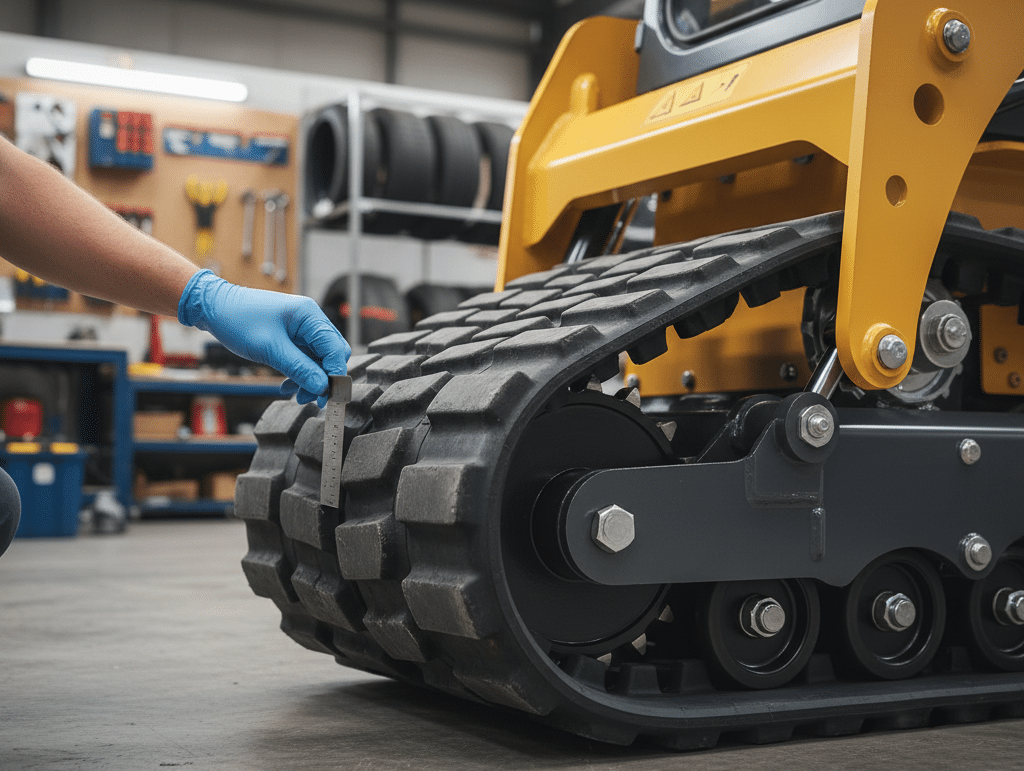
When it comes to your heavy equipment, the undercarriage is often the most significant maintenance expense. For machines running on rubber tracks, understanding what causes wear and tear is the first step toward protecting your investment and ensuring a long, productive life for your equipment.
Here is a breakdown of the key factors that contribute to rubber track wear and how you can prevent them.
The single most important factor in extending the life of your undercarriage is accurate tensioning. Many operators make the mistake of running tracks too tight, thinking it prevents de-tracking. However, tracks that are too tight can increase wear by up to 50%.
A track that is over-tensioned amplifies the load on the entire system. This puts excessive stress on the links and the sprocket, leading to premature failure and costly repairs.
How do you find the “Sweet Spot”? The correct tension varies depending on the size of your equipment:
Always consult your operator’s manual for the specific tensioning requirements of your make and model.
Using the wrong size track is a recipe for disaster. An improperly sized track doesn’t just fit poorly; it increases pressure across all undercarriage components, including idlers, rollers, and sprockets.
When selecting tracks, bigger isn’t always better. Typically, it is best to select the narrowest tracks available for your specific machine to reduce stress and improve maneuverability. If you are unsure, our trained staff can provide you with the exact O.E.M. width specifications for your machine to ensure a perfect fit.
While mechanical factors are vital, the longevity of your rubber tracks ultimately comes down to two things: a careful operator and routine maintenance.
Your rubber tracks are the foundation of your machine’s performance. By ensuring accurate tensioning, choosing the correct O.E.M. size, and committing to proactive maintenance, you can safeguard your equipment and get the maximum use out of your tracks.
Need help finding the right tracks or tensioning specs for your machine? Contact our expert team today—we have the knowledge and the O.E.M. data to keep your fleet running smoothly!
Monday - Friday: 7am - 6pm
Saturday: 8am - 12pm
Sunday: On call
All contents and materials © Copyright AIS Equipment 2026
Website designed and developed by Web Ascender
Explore our spring pre-buy catalog.
Special ends March 31st.